
Industrial operations are under increasing pressure to do more with less. Reducing energy consumption, lowering maintenance costs, and meeting sustainability goals have become just as important as maintaining production efficiency. While pumps have long been the standard choice for fluid transfer and vacuum generation, many industries are now exploring alternatives that deliver the same performance with a smaller environmental footprint.
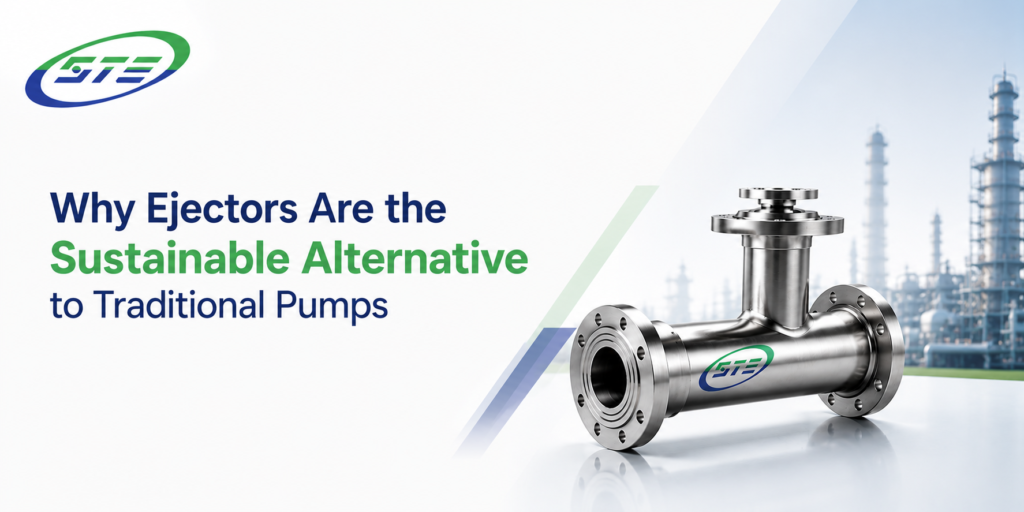
This is where sustainable fluid handling solutions like ejectors stand out. Unlike conventional pumps that rely on moving mechanical components, ejectors operate using the principle of fluid dynamics. Their simple yet effective design makes them highly reliable, energy-efficient in the right applications, and easier to maintain over the long term.
For industries examining to balance operational efficiency with environmental responsibility, an eco-friendly ejector offers a practical and proven solution.
Understanding How Ejectors Work
An ejector uses a high-pressure motive fluid, such as steam, water, or compressed air, to create a low-pressure zone. This pressure difference draws in another fluid or gas and transports it through the system without requiring any moving mechanical parts.
The design may seem simple, but it offers remarkable advantages in demanding industrial environments. Because there are no rotating components, bearings, or seals, ejectors experience minimal wear and require far less maintenance than conventional pumping systems.
This makes them suitable for industries where reliability and continuous operation are critical, including chemical processing, water treatment, thermal power plants, fertilisers, pharmaceuticals, and marine applications.
Why Sustainability Matters in Fluid Handling
Industrial fluid handling systems consume a significant amount of energy throughout their operational life. Beyond electricity usage, maintenance activities, replacement parts, lubrication requirements, and equipment downtime all contribute to the overall environmental impact.
What many businesses don’t realise is that sustainability is not determined solely by power consumption. Equipment longevity, maintenance frequency, waste generation, and operational reliability all play equally important roles.
Choosing the right technology can significantly reduce both operating costs and environmental impact over time.
Advantages of Ejectors Over Traditional Pumps
1. Fewer Mechanical Components Mean Lower Resource Consumption
Traditional pumps depend on multiple mechanical parts working together continuously. Over time, components such as seals, bearings, impellers, shafts, and couplings wear out and require replacement.
An ejector eliminates nearly all of these moving elements.
The result is:
- Less material consumption
- Reduced spare part requirements
- Lower maintenance waste
- Longer operational lifespan
This straightforward design supports a more sustainable approach to fluid handling by reducing the resources required throughout the equipment’s life cycle.
2. Reduced Maintenance Requirements
Maintenance activities often involve replacement parts, lubricants, service visits, and production downtime. These activities consume both financial and environmental resources.
Because ejectors have no moving parts, maintenance is considerably simpler.
In many industrial applications, routine inspection and periodic cleaning are sufficient to keep the system operating efficiently.
This translates into:
- Lower maintenance costs
- Reduced equipment downtime
- Fewer replacement components
- Increased operational reliability
For facilities operating around the clock, minimising maintenance interruptions can have a substantial impact on productivity.
3. Longer Equipment Life
Industrial equipment is expected to deliver consistent performance for years. Frequent equipment replacement not only increases capital expenditure but also contributes to additional manufacturing and disposal-related environmental impact.
A properly designed ejector can provide reliable performance for many years with minimal degradation.
Its resistance to mechanical wear makes it especially valuable in demanding industrial environments where conventional pumps may experience accelerated component failure.
Longer service life naturally supports sustainability by reducing the frequency of equipment replacement.
4. Suitable for Corrosive and Challenging Applications
Many industrial processes involve aggressive chemicals, corrosive liquids, abrasive particles, or high-temperature media.
Traditional pumps often require specialised sealing systems and frequent maintenance under such conditions.
Modern ejectors can be manufactured from materials such as stainless steel, PTFE, polypropylene, ebonite-lined mild steel, and other corrosion-resistant materials to meet specific process requirements.
This flexibility helps industries achieve reliable performance while reducing failures caused by corrosion or chemical attack.
5. Improved Operational Reliability
Unexpected equipment failures can have serious consequences, from production losses to increased energy consumption during restart procedures.
Since ejectors operate without rotating equipment, the chances of mechanical breakdown are significantly lower.
In our experience, facilities that prioritise equipment reliability often discover that the simplest engineering solutions deliver the most consistent long-term performance.
This reliability is especially valuable in continuous-processing industries, where every hour of downtime affects productivity.
Energy Efficiency Depends on the Application
One common misconception is that every pump replacement automatically reduces energy consumption.
Here’s where things get interesting.
The efficiency of an ejector depends on how it is applied. In systems where steam, compressed air, or pressurised water is already available as part of the industrial process, ejectors can operate very efficiently without requiring additional electric motors.
For applications involving vacuum generation, gas removal, mixing, and specific fluid transfer processes, ejectors often provide an excellent balance between operational performance and energy utilisation.
Selecting the right solution requires careful evaluation of the entire process rather than comparing equipment in isolation.
Supporting Sustainable Industrial Operations
Sustainability is no longer limited to reducing emissions. Modern manufacturing facilities are adopting practices that improve efficiency across the entire production cycle.
An eco-friendly ejector contributes to these objectives in several ways:
- Lower maintenance-related waste
- Reduced consumption of spare parts
- Longer equipment lifespan
- Reliable operation in demanding environments
- Lower risk of mechanical failures
- Minimal lubrication requirements
Each of these advantages supports broader environmental and operational goals without compromising industrial performance.
Industries Benefiting from Sustainable Ejector Solutions
The versatility of ejectors enables them to serve a wide range of industries requiring dependable, efficient fluid handling.
Some of the major sectors include:
Chemical Processing
Chemical plants require equipment capable of handling corrosive fluids safely and consistently. Ejectors provide dependable performance while reducing maintenance concerns associated with mechanical pumps.
Water and Wastewater Treatment
Water treatment facilities increasingly focus on efficient operations with reduced maintenance requirements. Ejectors assist in various treatment processes while supporting long-term operational reliability.
Fertiliser and Process Industries
Continuous production environments benefit from equipment that can withstand harsh operating conditions without frequent servicing.
Thermal Power Plants
Steam ejectors have long been used in power generation for vacuum creation and condenser applications, offering dependable performance under demanding conditions.
Marine and Industrial Utilities
Marine applications require compact, reliable equipment that requires minimal maintenance. Ejectors meet these requirements effectively due to their robust construction.
Choosing the Right Ejector
Not every ejector is identical. Performance depends on factors such as process conditions, operating pressure, fluid characteristics, material compatibility, and system design.
An experienced manufacturer evaluates these parameters before recommending the appropriate ejector configuration.
Custom-designed solutions often provide better efficiency, longer service life, and improved overall performance compared to standard off-the-shelf options.
This is particularly important for industries dealing with specialised chemicals, high temperatures, or complex operating environments.
Conclusion
As industries continue to prioritise operational efficiency alongside environmental responsibility, the shift towards sustainable fluid handling technologies is becoming increasingly important.
An eco-friendly ejector offers a practical alternative to traditional pumps in many industrial applications. Its simple construction, low maintenance requirements, long service life, and reliable performance make it a valuable investment for businesses seeking dependable fluid handling solutions with reduced environmental impact.
With decades of expertise in manufacturing industrial ejectors for diverse applications, MSEL Ejectors delivers engineered solutions designed to meet the performance, durability, and process requirements of modern industries. Choosing the right ejector not only improves operational efficiency but also supports a more sustainable and cost-effective future for industrial fluid handling.