
What is a Vacuum Ejector and How Does It Work?
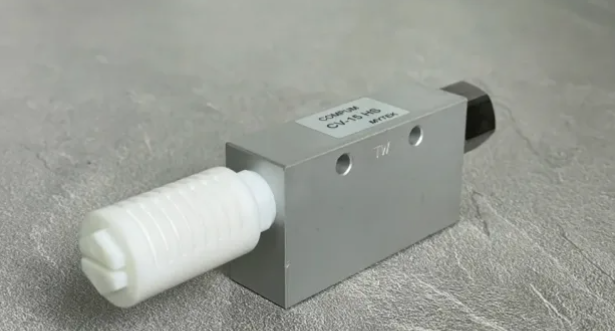
Walk into any DM water treatment plant, chemical processing unit, or softener setup, and you’ll find one component doing critical work without a single moving part. No motor humming, no seals wearing down, no bearings to grease. Just fluid pressure, cleverly redirected. That’s a vacuum ejector, and if you’ve ever wondered how an entire plant creates suction or handles chemical dosing without a mechanical pump in sight, this is the piece of engineering that makes it possible.
At Sai-Tech Engineers, we’ve spent over two decades manufacturing ejectors for exactly this kind of application, so we get asked the same question fairly often: what is a vacuum ejector, and how does it actually work? Let’s break it down properly.
What is a Vacuum Ejector?
A vacuum ejector is a static fluid-handling device that uses a high-pressure motive fluid, typically steam, water, or compressed air, to entrain and remove a low-pressure gas or vapour from a system, effectively creating a vacuum. There’s no electric motor, no rotating impeller, no moving internals of any kind. The entire function relies purely on fluid dynamics.
This is what makes a vacuum ejector fundamentally different from a mechanical vacuum pump. Where a pump depends on moving parts that wear out over time, an ejector achieves the same result, sometimes better, using pressure energy alone. In our experience manufacturing these for chemical plants, sugar factories, and demineralisation units across India and the Middle East, the absence of moving parts is often the single biggest reason clients switch to ejector-based systems in the first place.
The Vacuum Ejector Working Principle, Explained Simply
Here’s where things get interesting. The vacuum ejector’s working principle is based on the Venturi effect, and once you understand it, the whole device makes intuitive sense.
A motive fluid, usually pressurised steam or water, is forced through a converging nozzle inside the ejector body. As the fluid passes through this narrowing nozzle, its velocity increases sharply while its pressure drops. That pressure drop is the whole trick. It creates a localised low-pressure zone right at the throat of the ejector.
Because nature always moves toward equilibrium, the surrounding gas or vapour, the fluid you’re trying to remove, gets pulled into this low-pressure zone. It mixes with the high-velocity motive fluid and gets carried along with it into a diverging section called the diffuser. Here, the combined flow slows down again, and velocity converts back into pressure, allowing the mixture to be discharged at a pressure high enough to exit the system.
That’s the vacuum ejector function in a nutshell: convert pressure energy into velocity, use that velocity to entrain a secondary fluid, then convert velocity back into pressure to discharge it. No motors. No moving parts. Just physics doing the heavy lifting.
Why This Matters for Industrial Applications
What most people don’t realise is how much this simple mechanical principle affects a plant’s reliability equation. In DM water treatment plants, for instance, ejectors handle the dilution and mixing of acid and caustic with water during the regeneration of Anion, Cation, and Mixed Bed Resins. This is corrosive, demanding work, exactly the kind of environment where mechanical pumps tend to fail early.
A vacuum ejector, by contrast, has nothing to corrode in the mechanical sense beyond the body material itself, which is why material selection becomes so important. This is also where our range comes in: MSEL (Mild Steel Ebonite Lined), MSRL, SS316, PP, and Teflon-lined ejectors are each built for specific chemical environments, temperature ranges, and corrosion factors, so the ejector matches the process rather than the process compromising around the ejector.
Key Advantages of Vacuum Ejectors
A few reasons plants across industries continue to specify ejectors over mechanical alternatives:
Zero moving parts, which directly translate to lower maintenance cycles and virtually no mechanical wear.
Energy efficiency: when the motive fluid is optimised correctly, a vacuum ejector can be a genuinely cost-effective solution compared to running an electrically driven pump continuously.
Reliability under harsh conditions, corrosive chemicals, high temperatures, and continuous operation are exactly the conditions where mechanical vacuum pumps struggle. Ejectors, built in the right material of construction, simply keep going.
Simplicity: fewer components mean fewer failure points. In an industrial setting, that’s not a minor advantage; it’s often the deciding factor.
Where Vacuum Ejectors Are Actually Used
The vacuum ejector isn’t a niche piece of equipment. It shows up across a surprisingly wide range of industries:
- Demineralisation (DM) and softener plants, for acid and caustic dosing during resin regeneration
- Chemical manufacturing, for precise blending and mixing of reactive fluids
- Sugar factories, where long-term reliability with zero moving parts is non-negotiable
- Marine and shipping applications, for bilge and cargo space pumping
- General industrial fluid-handling systems, wherever a vacuum needs to be created without introducing mechanical complexity
If your process involves creating suction, evacuating gases, or mixing fluids in a fixed ratio under demanding chemical or thermal conditions, there’s a strong chance that a properly designed vacuum ejector solves the problem more reliably than a mechanical alternative.
Getting the Right Ejector for Your Process
Here’s the part that’s easy to overlook: not every vacuum ejector is built the same, and the working principle only delivers results when the design, nozzle geometry, throat diameter, diffuser length, and material of construction are matched precisely to your process conditions. A generic ejector dropped into a highly corrosive or high-temperature application won’t perform anywhere close to its potential, regardless of how sound the underlying physics is.
This is exactly where two decades of manufacturing experience make a tangible difference. At Sai-Tech, every ejector we build, whether it’s a 1:1-ratio unibody design or a 1:5-ratio two-part construction, undergoes quality testing before it reaches the plant floor, and we work directly with customers to match the ejector to their actual operating conditions rather than offering a one-size-fits-all unit.
If you’re evaluating whether a vacuum ejector is the right fit for your plant, or need one engineered around specific chemical, temperature, or MOC requirements, our team is glad to walk through the specifics with you.